 ReelAtlas
Guides
Titles, series and configurations | How to compare releases
Sweet Bonanza, 1000 and 2500 show why similar names need separate pages and sources.
On this page
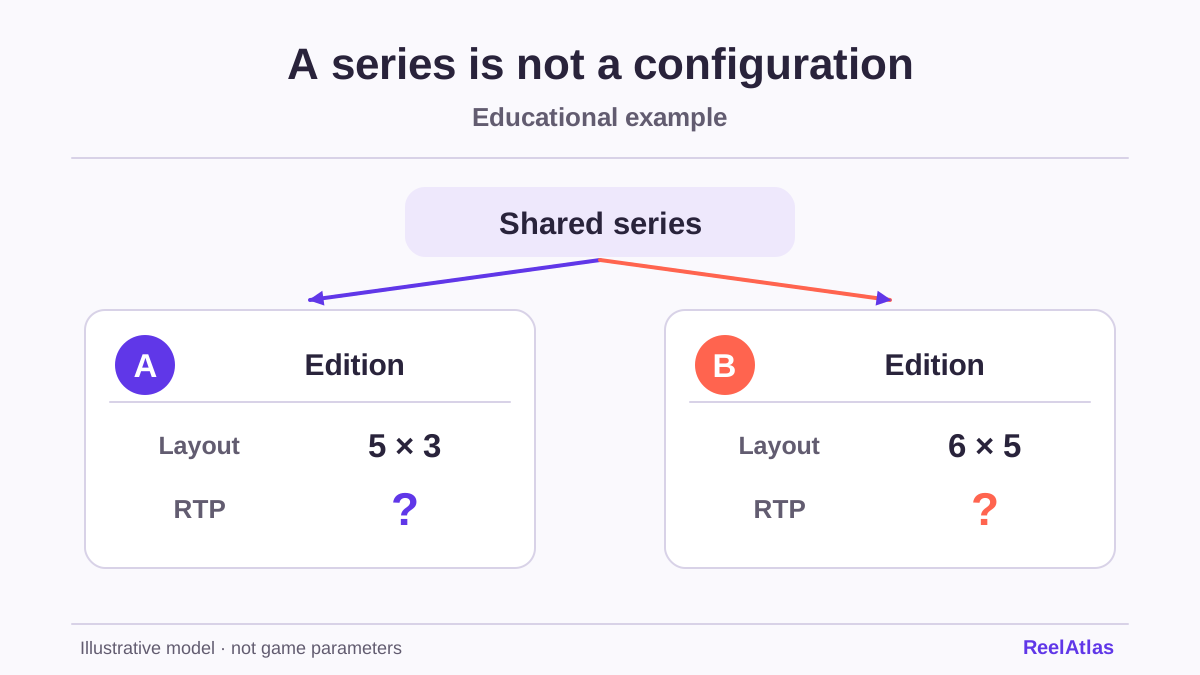
A series groups related products. A title identifies a game. A configuration identifies the variant described in the documentation. Record these three levels separately before comparing numbers.
The Sweet Bonanza family as an example
The original Sweet Bonanza, Sweet Bonanza 1000 and Sweet Bonanza 2500 appear as three titles in the ReelAtlas catalogue. We use separate producer pages or announcements for them instead of putting parameters from every release on one page.[1][2][3]
The description for 1000 gives multiplier bombs up to 1000x, while the 2500 announcement describes multipliers up to 2500x. That compares one documented feature. It does not establish a proportional change in RTP or probabilities.[2][3]
A shared theme leaves the mathematics open
Similar colours, characters and grid layouts make a family recognisable. They do not establish an identical distribution of outcomes. A feature can keep a similar name while the details of how it works change.
Comparison matrix
- Identity: full title, studio and specified release.
- Structure: grid and how matches are scored.
- Features: trigger condition and multiplier range.
- Configuration: mode, version identifier and RTP source, if available.
- Market scope: a separate note on what the document covers.
How to handle conflicting data
Start with the title and version, then compare dates and definitions. If a source omits the version, record the gap. Avoid choosing the largest figure or averaging values from documents that are not comparable.
If two documents concern the same configuration, keep both addresses and describe the discrepancy. The field can remain unresolved until an explanation is available. This helps readers see where the evidence stops.
What this means for navigation
Distinct titles have their own pages. Mechanics articles provide shared explanations and point to specific examples. You can compare several products without reading five copies of the same definition.
The comparison covers producer documentation. It does not rank operators, list services available in Germany or recommend a game.