 ReelAtlas
Mechanics
Wild and Scatter: reading special symbols
Substitution, feature triggers and paytable exceptions, explained through simple examples.
On this page
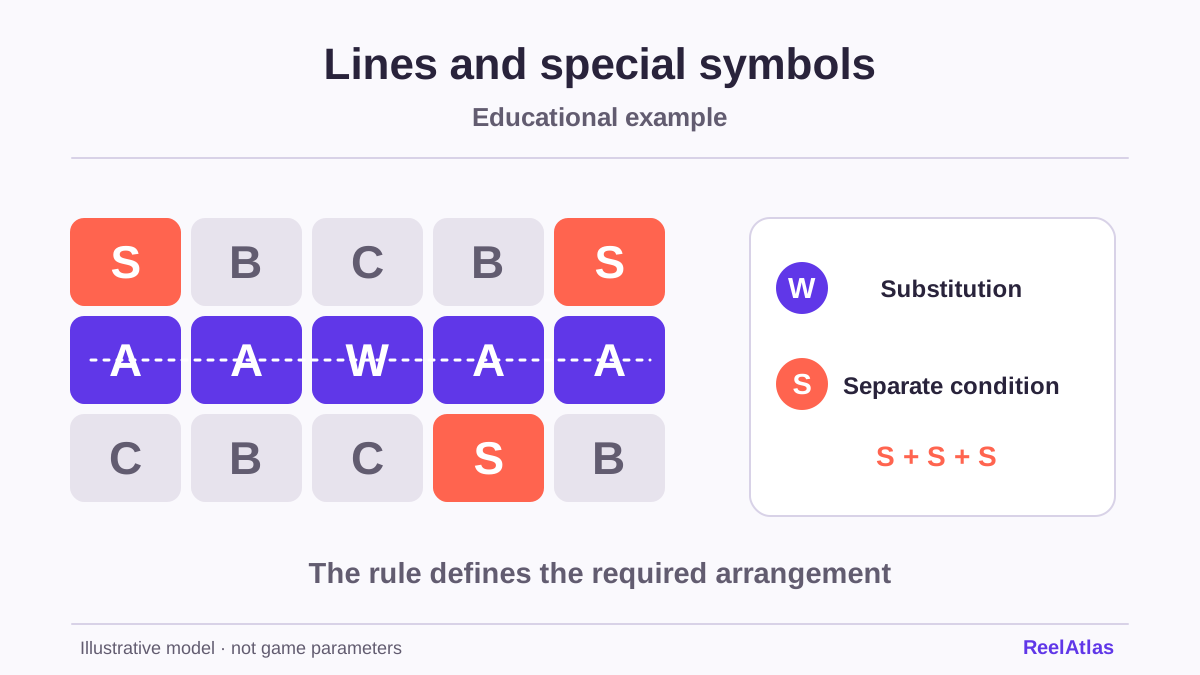
Wild and Scatter describe symbol roles. A Wild may substitute for specified symbols to form a combination. A Scatter can follow a separate rule, such as counting appearances anywhere on the grid. Read the particular title’s rules for the scope of each role.
A Wild follows a substitution rule
Imagine the line A, Wild, A. If the rules allow the Wild to stand for A, that pattern may meet the requirement for three As. Replace the middle symbol with a Scatter and that conclusion no longer follows. The rule determines the result.
Look for exceptions too, including symbols that cannot be replaced, reel restrictions and differences between the base round and a feature. These details determine how the example is scored.
Scatter: count, position and effect
Ask how many symbols are needed, where they can appear and what they trigger. The official Gates of Olympus 1000 page states that four or more Scatters trigger fifteen extra spins. Those numbers apply to that title.[2]
Games can require different numbers of Scatters, and some Scatters have no separate cash payout. The symbol can trigger a feature, carry its own payout or do both. Check the title’s paytable.
One symbol can play both roles
The Play’n GO guide describes the book in Book of Dead as both Wild and Scatter. Its role in a given scoring decision tells you more than asking which symbol is better.[1]
A short glossary for reading rules
- Substitute: replace another symbol within the stated exceptions.
- Expanding: extend the symbol or its area. Check when this happens.
- Sticky: remain in place for a stated part of the feature.
- Multiplier: multiply a specified part of the scoring calculation.
Wilds, Scatters and multipliers are features, not a measure of odds. RTP, the result distribution and the chance of triggering a feature require separate data.