 ReelAtlas
Guides
How to read a paytable | Find the unit before reading 10x
Line stake, round stake, multiplier and net result. The same 10x can mean two different amounts.
On this page
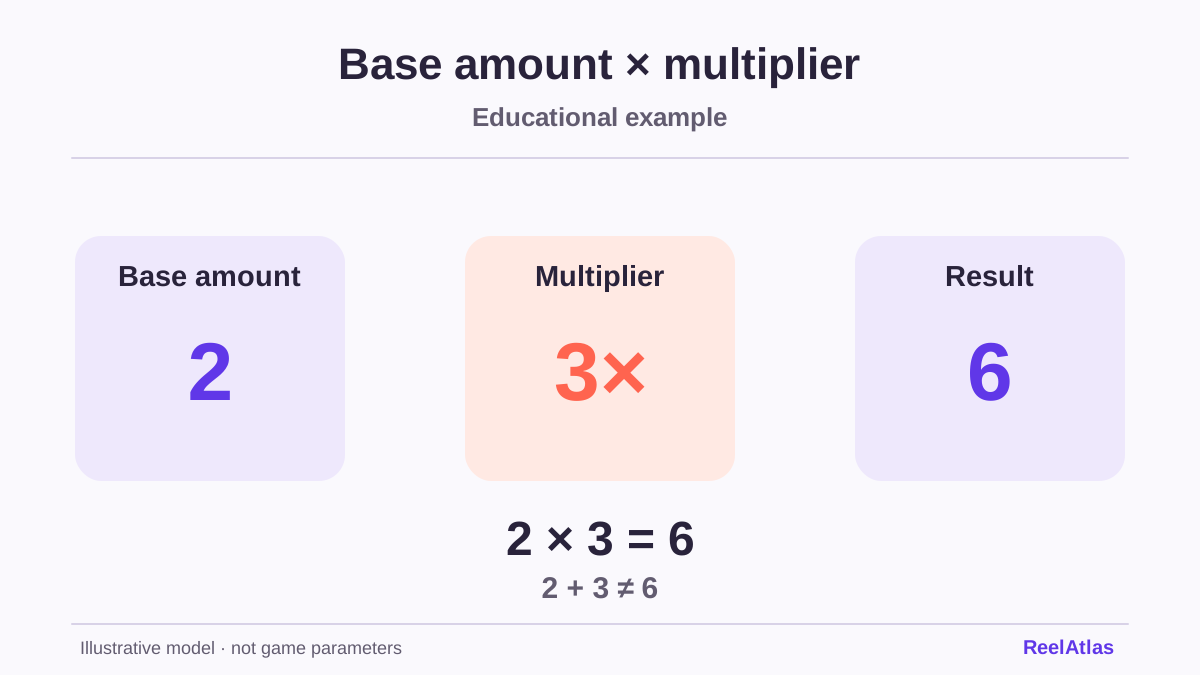
The most important detail in a paytable can be a small note beneath the numbers. It names the unit, such as the line stake, the full round stake or another basis. Without that unit, 10x is incomplete. Read the note before comparing the largest multipliers.
One multiplier, two calculations
Imagine two fictional models. In both, the round costs 2 units and the paytable shows 10x for the combination in question. The first model has twenty equal line stakes of 0.1 units. If the multiplier applies to a single line stake, that combination returns 10 × 0.1 = 1 unit.
In the second model, the rules apply 10x to the total stake for the round. The same notation then means 10 × 2 = 20 units. The difference comes from the definition of the base. It tells you nothing about which RTP is higher, since we have not specified probabilities or other payouts.
Identify what makes a combination
Before using the table, check the minimum number of symbols, the reading direction and the position rule. In a line model, five identical icons scattered around the grid may form no paying line. A cluster model may need a connected group. A count-anywhere model has a different requirement.
Check how overlapping combinations are handled. Do the rules pay only for the longest match on a line? Do they add several lines separately? Avoid adding the values for three, four and five symbols if the rule pays only the highest match.
Separate a stage from the whole round
In the next exercise, a paid round costs 2 units. Three settlements within it return 0.6, 0.4 and 1.4 respectively. The total return is 2.4 and the net result after cost is 0.4. If the final counter already shows 2.4, adding the three amounts again would count them twice.
The displayed amount may already include a multiplier. Compare the counter description with the rules. A record can use separate columns for the value before the multiplier, the applied multiplier, the stage result and the round total. Leave a field blank when the interface does not make the value clear.
A stake change calls for another look
A paytable may show multipliers or amounts calculated for the current stake. When the basis changes, check whether the numbers, the unit label or both have changed. Screenshots from different settings can both be accurate. You need the full context of both displays to compare them.
- Record the cost of the whole round and the basis of the paytable values.
- Identify the combination model and the exceptions for Wild and Scatter.
- Separate stage amounts from the final total.
- Note whether the multiplier has already been applied.
- Calculate the net result after subtracting the cost.
Check your reading
A round costs 2 units and returns 1. Is that a gain? The net result is minus 1. Does 10x by itself establish that the game is better? It does not. From here, explore the difference between a maximum and RTP, or read about multipliers and why the order of operations matters.